
Slow lorises live almost entirely unseen by humans.
Active only at night and hidden high in the forest canopy, they are notoriously difficult to study. But researchers are now using a suite of technologies to follow their movements and behaviour in unprecedented detail.
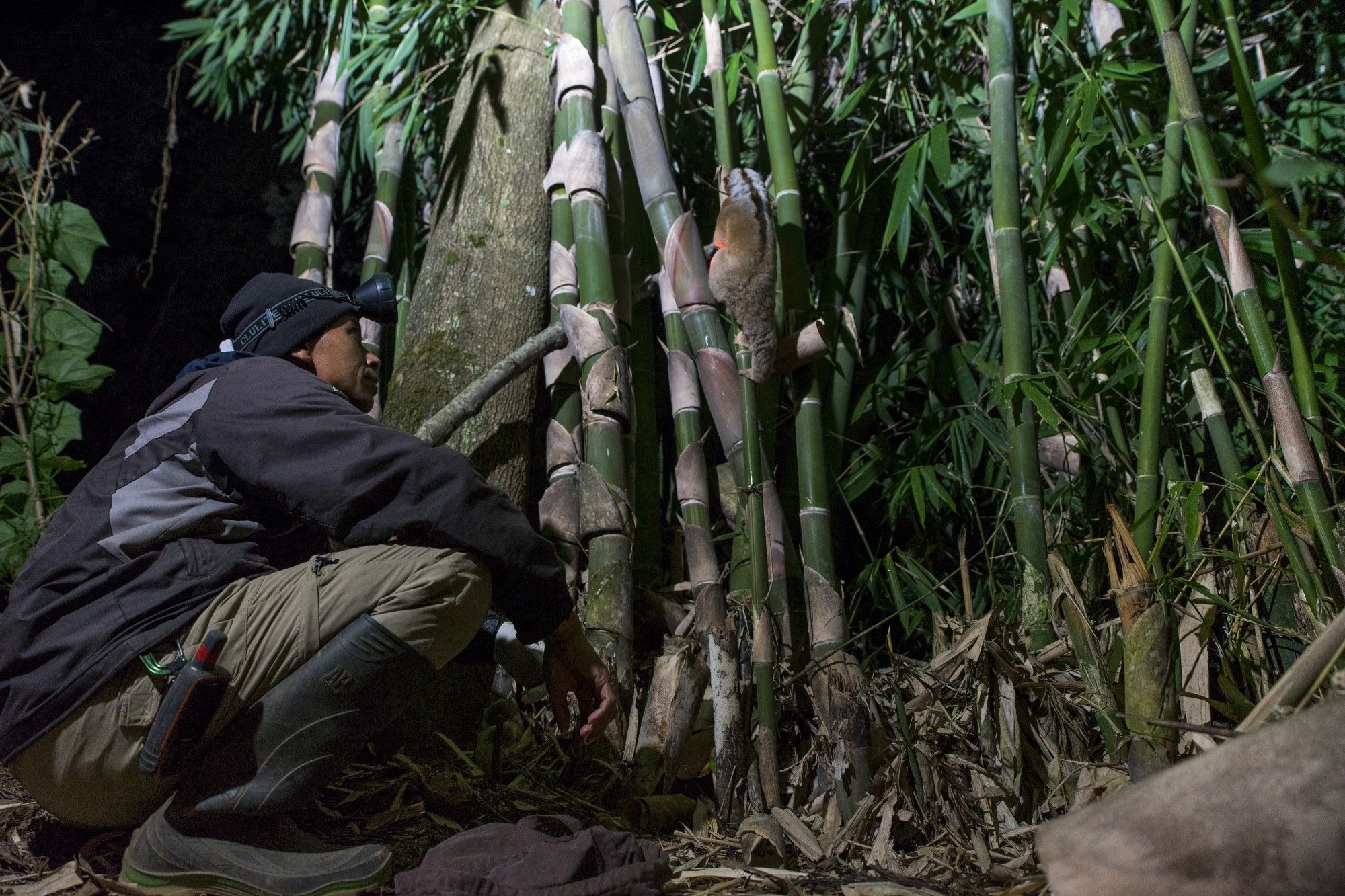
Currently, 31 slow lorises from eight family groups are being monitored by the team at Little Fireface Project, including two newborn infants. Professor Anna Nekaris and her team of experienced researchers use radio tracking to follow individual animals through the forest, allowing them to understand how far they travel, where they rest and how they use their territory.
But radio tracking is just one part of the toolkit. The team uses a combination of tools, including radio tracking to follow individuals through the forest, accelerometers to record movement, temperature loggers to monitor conditions, thermal cameras to locate animals at night, bioacoustic monitors to capture calls and camera traps to observe behaviour when researchers aren’t present.
Together, these tools provide a far more complete picture of slow loris life than traditional observation alone.
New discoveries about slow loris behaviour
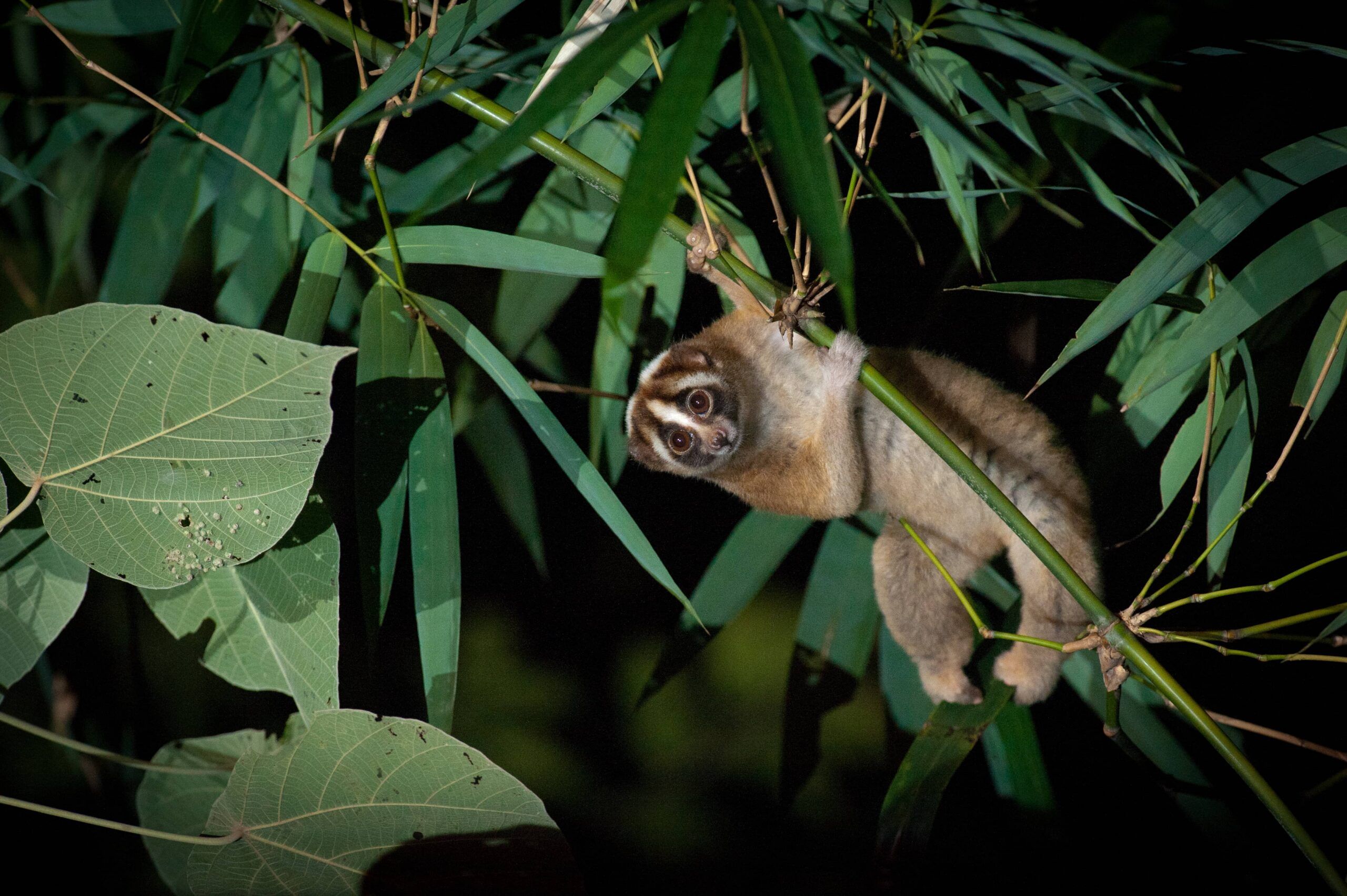
One of the most fascinating aspects of long-term research is the opportunity to witness events that are rarely observed in the wild.
During the study, Anna and the researchers documented a remarkable territorial shift. A long-studied female loris that had occupied a particular home range died of natural causes. Shortly afterwards, an adult female named Loopi moved in and took over the territory.
Events like this help scientists understand how slow loris populations reorganise themselves when individuals disappear or die which is an important clue to how populations stay stable over time.
The research has also provided insights into the challenges faced by dispersing lorises. When young adults leave their family group to establish a new home range, they often encounter other lorises along the way. These encounters can lead to venomous fights, a unique feature of slow lorises, which are the world’s only venomous primates.
By analysing injuries in dispersing individuals, researchers found that lorises wounded in these encounters are less likely to successfully establish a new home range. This means that conflicts during dispersal may have a significant impact on survival and population dynamics.
Rethinking how we map slow loris habitat
Understanding where slow lorises live – and what makes a habitat suitable for them – is critical for conservation planning.
To explore this, researchers compared drone-based habitat surveys with commonly used commercial satellite imagery. The findings revealed an important limitation: satellite data can sometimes overestimate suitable loris habitat.
For example, areas that appear forested from satellite images may actually contain agricultural crops, which provide far fewer resources and safe travel routes for arboreal animals like lorises.
By using drones to capture more detailed imagery, researchers can identify subtle habitat differences that are invisible from space. This improved accuracy will help conservationists better identify priority areas for protection and restoration.
Listening to the forest at night
Slow lorises are known to communicate using a range of vocalisations, but many of their calls are difficult for humans to hear.
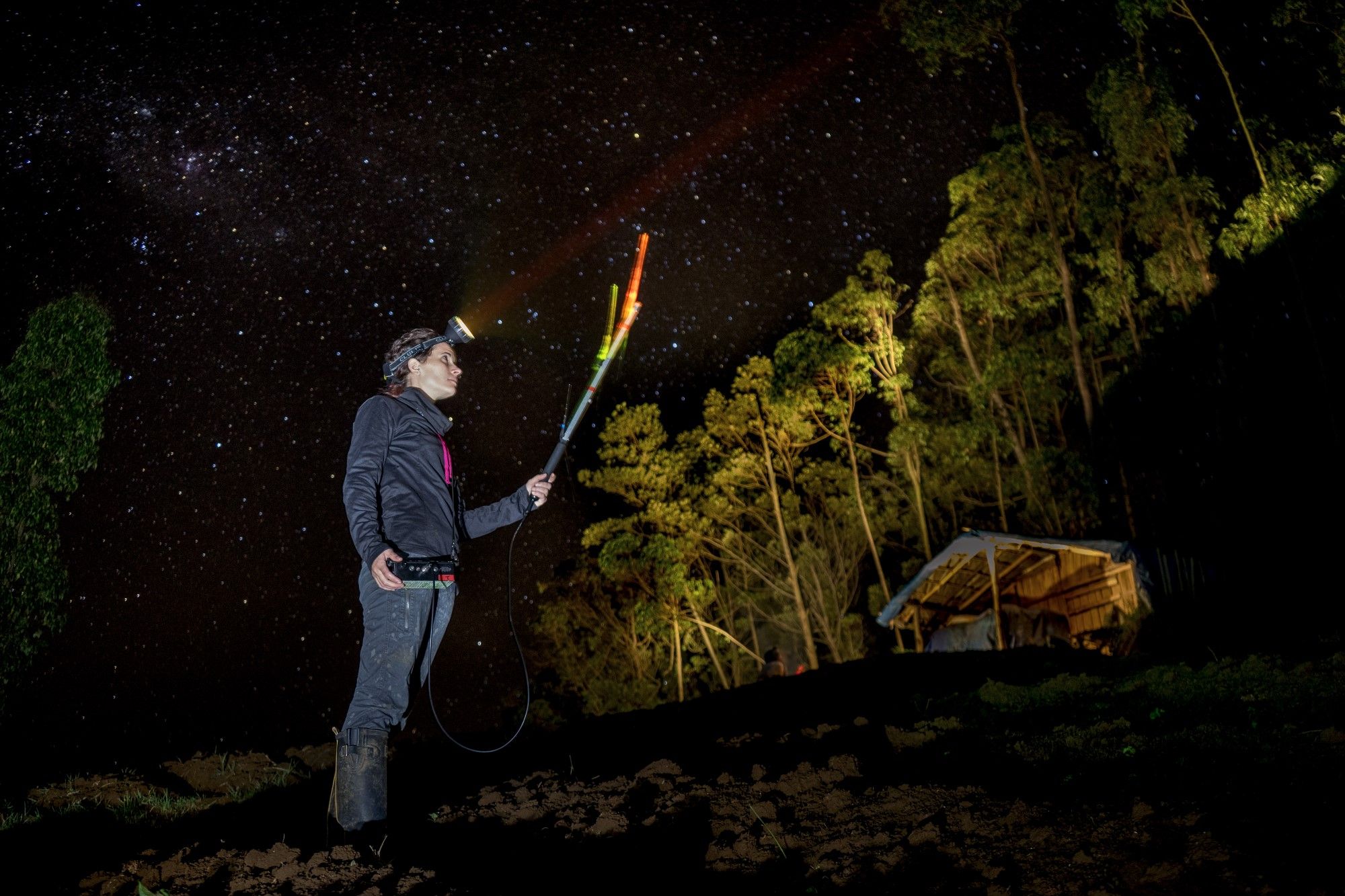
To capture these sounds, the Little Fireface Project team have installed passive acoustic monitors throughout the study sites, including within the home ranges of each slow loris family group. These devices record the forest soundscape around the clock, allowing scientists to analyse vocal behaviour without disturbing the animals.
Among the recordings, the team has identified what may be a previously undocumented ultrasonic call, nicknamed “the squeak.” Further analysis will help determine its purpose, whether it plays a role in communication between individuals, territorial behaviour or interactions between family members.
Discoveries like this highlight just how much there is still to learn about these elusive primates.
Working with communities to reduce threats
Conservation success rarely comes from research alone. Protecting wildlife often requires practical solutions developed in partnership with local communities and organisations.
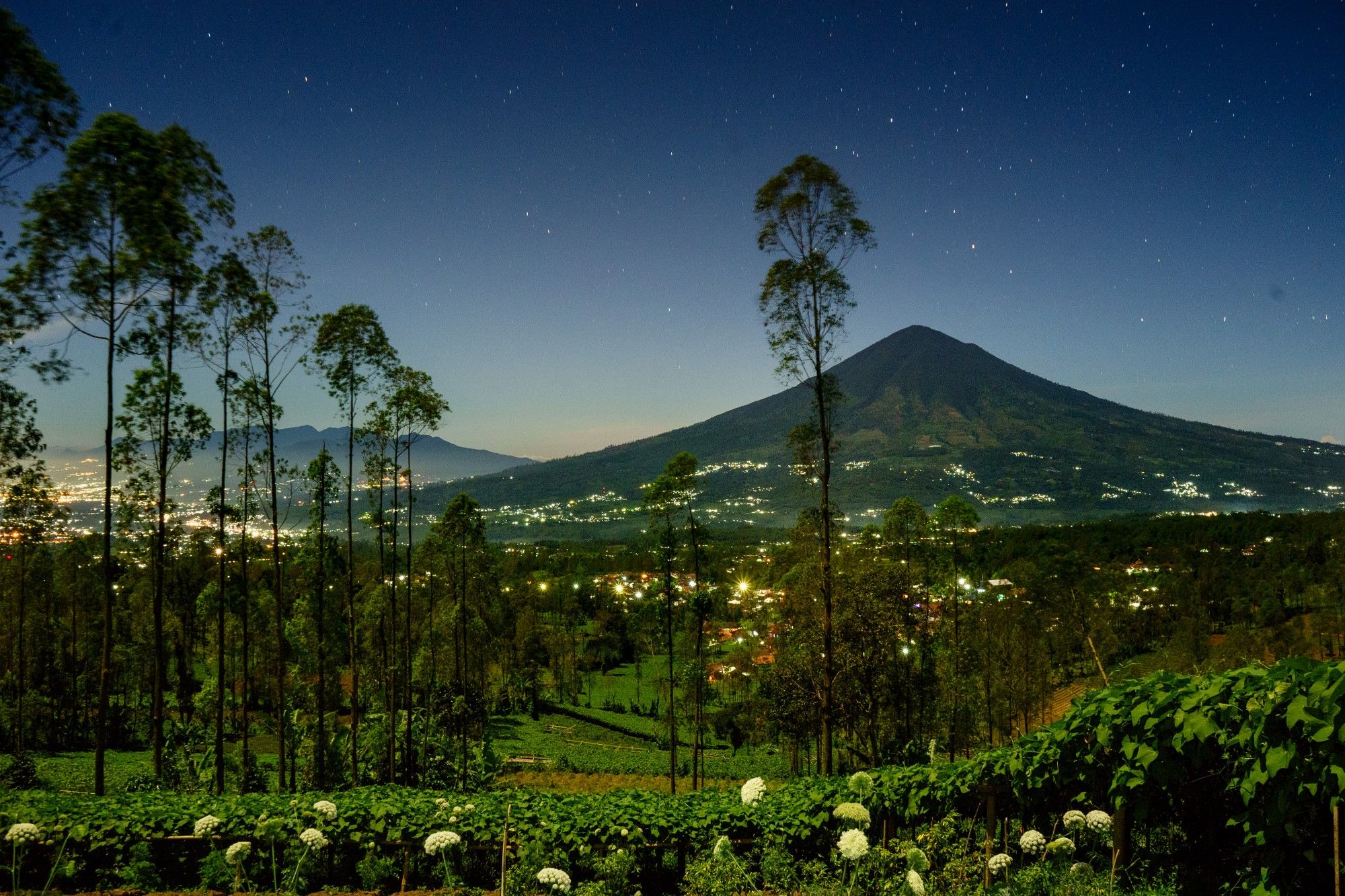
In the village of Cipaganti, researchers have been working closely with residents through outreach programmes and educational initiatives, as well as collaborating with Indonesia’s state electricity company, PLN (Perusahaan Listrik Negara).
One significant threat to arboreal wildlife is electrocution from power lines, which animals may use as travel routes across fragmented landscapes. To address this, the team has begun insulating power lines with coconut fibre, which is a locally available, cost-effective material.
This simple solution could help reduce the risk of lorises being electrocuted while moving between trees. Researchers are now monitoring these insulated lines to assess how effective the approach is and whether it could be expanded to other areas.
Building knowledge for conservation
Every new insight, from territorial behaviour to habitat mapping and acoustic communication, adds to our understanding of how slow lorises live and what they need to survive.
By combining advanced technology, long-term fieldwork and community collaboration, the research carried out by Little Fireface Project is helping scientists build a clearer picture of the challenges slow lorises face and the actions needed to protect them.
With continued support from PTES, this work is not only revealing the hidden lives of slow lorises, but helping ensure they have a future in the wild.
Discover more about our work with the Little Fireface Project in Java, Indonesia, and become a supporter today:
May 18th, 2026
Image credits: (Top to bottom) Tay Jing Xuan, Andrew Walmsley, Jul Wawan.