
For those of us of a certain latitude (north of 23.5 degrees North or south of the same number of degrees South), our annual trip round the Sun is a seasonal rollercoaster. From winter’s depths, spring climbs up to a dizzying, momentary summer, before the whooshing descent of autumn. For wildlife, spring sounds the buzzing, blossoming start of the year: the business of foraging, courting, chasing off rivals, and bringing up a brood, starts now.
And some are quicker off their marks than others.
A miniature steam train of love
Hedgehogs begin to make an appearance in March, having spent the winter hibernating, and they might be forgiven for being preoccupied with food. They can lose around a third of their bodyweight over winter, so busy themselves with building up fat reserves in the first few weeks after emerging. By mid-April or May, however, their thoughts turn to the business of finding a mate.

In short,
- Locate your mate. This is done by scent.
- Woo. Courtship is a long, energetic affair: an amorous male hedgehog woos with intent. To win the attentions of the female, he circles her, sometimes for hours, while she turns to face him. There is a lot of huffing and hissing by the female, her spines raised, to deter his advances, and a lot of grunting and snorting by the male to impress her. The whole affair is sometimes said to sound like a miniature steam train.
- ‘Tickets, please.’ The noisy activities of the courting pair attract the attention of other males who, as it were, aren’t in possession of a ticket, and are seen off by the original male. Fights may involve chases and head-butting, which further tests the stamina of the potential suitor.
- The coup de grâce. All this, however, might not be enough. Female hedgehogs are hard to impress. In most instances, she’ll just wander off.
If, on the other hand, the encounter is one of the five per cent or so that have a happy ending, the pair mate (carefully, as the old joke has it) and bid their adieu. A litter of four of five hoglets is born five weeks later and cared for solely by their mother.
Hedgehogs dance and bats sing
Bats also come out of hibernation in early spring, but when it comes to producing a brood, they have the edge. They arrange things so that courtship and mating take place the previous year.
From late summer, through the autumn, males go out on ‘songflights’, calling loudly to attract females. Back at a roost, the pair mate, but fertilisation is delayed until spring, and pups are born in early summer.
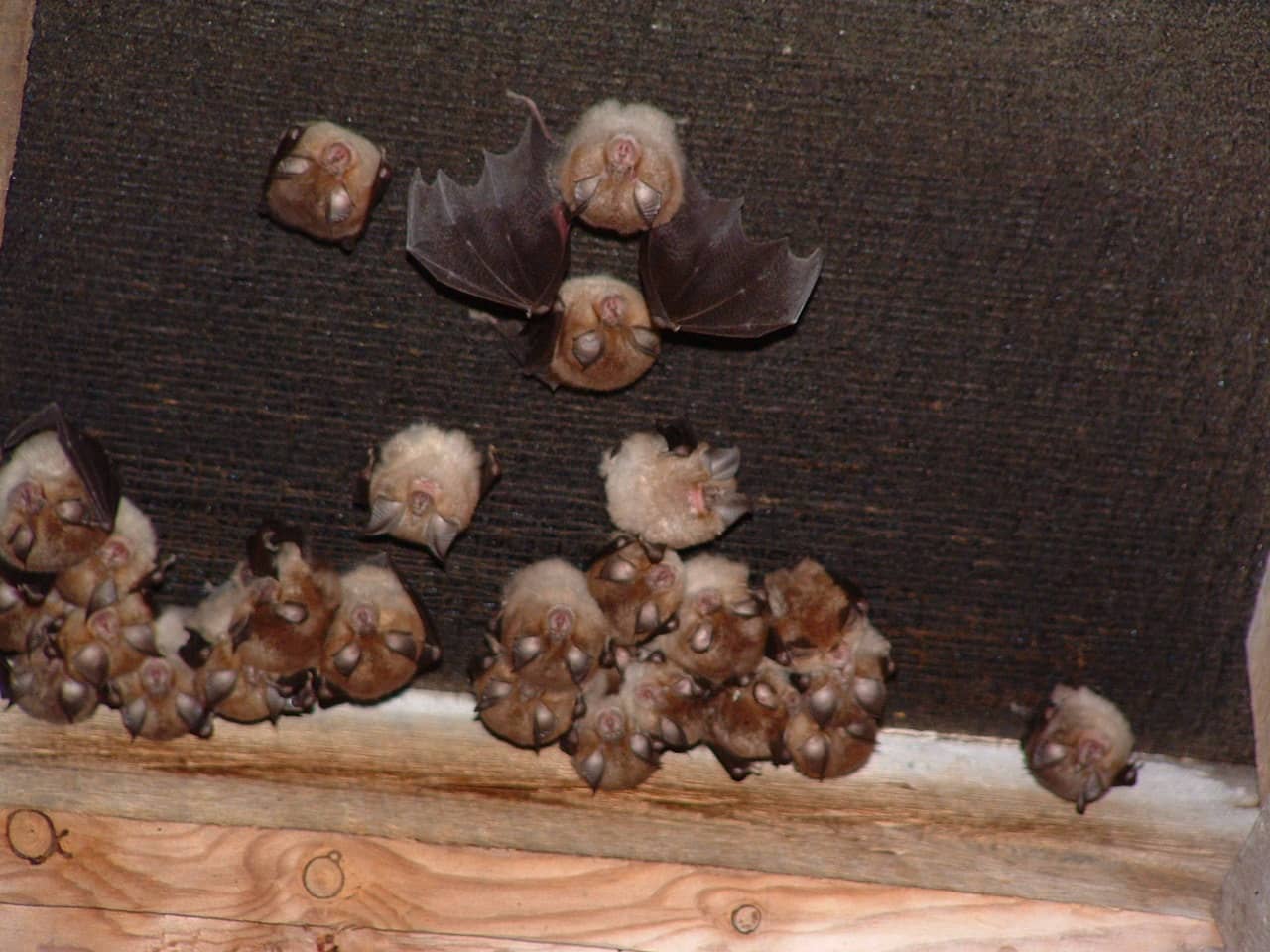
Females gather in maternity roosts – in effect, big creches – where females suckle their single pup for four to five weeks until the pups are old enough to fly and forage for themselves.
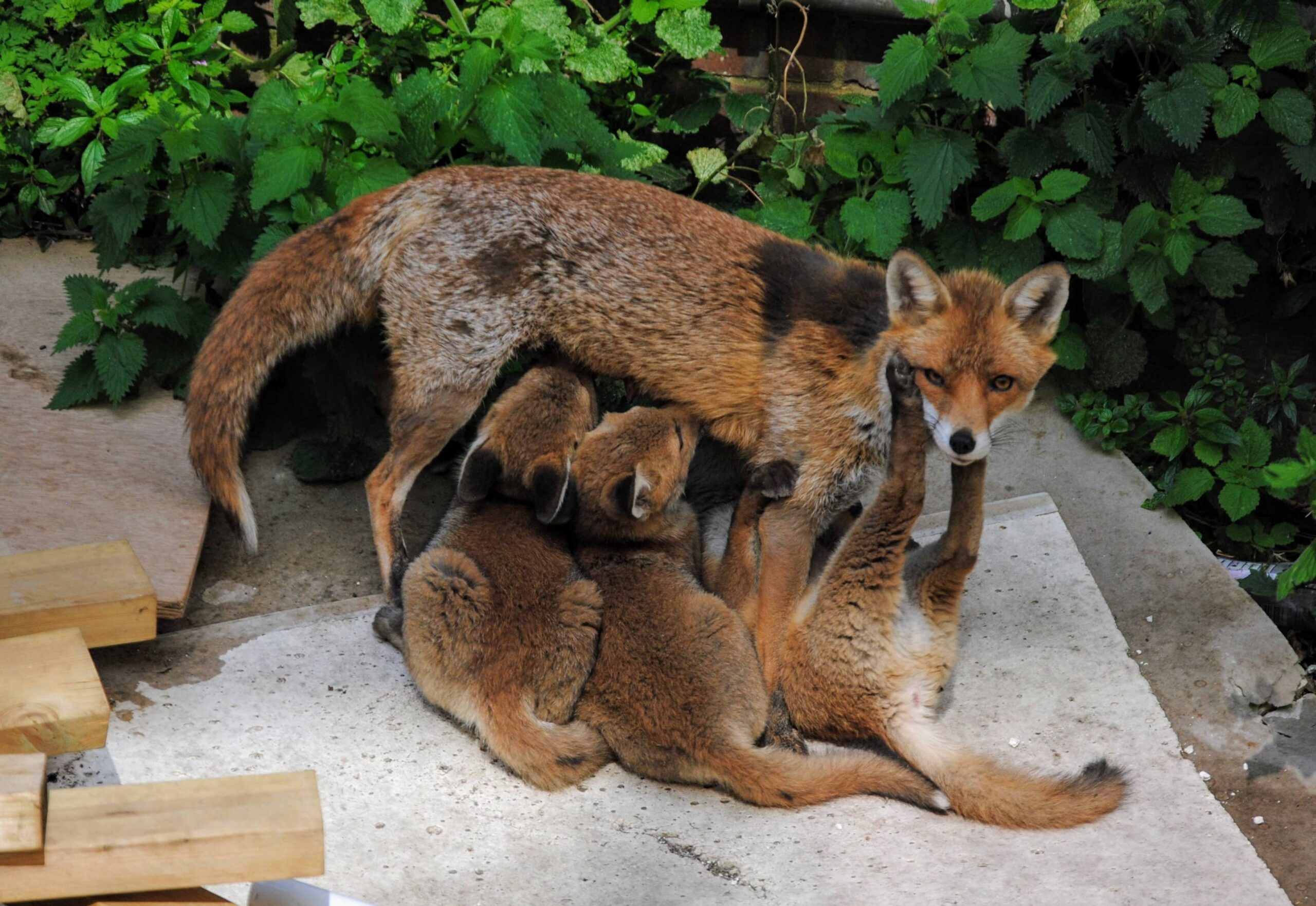
While hedgehogs and bats are just getting started, foxes are already nursing litters.
Like bats, foxes attract mates by calling to each other. Few, perhaps, would call it ‘singing,’ however. Blood-curdling screams and barks is nearer the mark. Both females and males call and males will do so to establish territories as well. All this typically goes on in January, and litters of four or five cubs are born in mid-March.
Unlike bats and hedgehogs, male foxes are dutiful partners, attending to the needs of their mate. In his book, My Life with Foxes, Eric Ashby noted that, just before the cubs were born, the male fox began to follow the female almost everywhere, sleeping next to her and bringing her food and toys. He continues to bring food, leaving it at the entrance of the den as usually he isn’t allowed in, while she suckles the cubs for four to six weeks.
In late April or May, the cubs venture out of the natal den, bursting on to the scene with all the joys of spring.
(The wonderfully comprehensive Wildlife Online gives a lot more fascinating information about foxes another wildlife and is well worth a visit.)
With all this going on, spring is the perfect time to keep an eye out for our wild neighbours and the clamour and bustle of a new year.
Get involved with our mammal watching survey, Living with Mammals today or visit our mammal fact files to learn more about British mammals:
Image credits: (from top to bottom) Hannah Thompson, Emma Matthews, Cetra Coverdale, Tessa Knight, Johnathon Green.
6th May, 2026