Outside your window, there are some ferocious predators: from insects to insectivores, and caterpillars to cats, fierce carnivores prowl around every corner.
A lot of wild mammals, although not strictly carnivores, will eat other animals occasionally. But one group is known for it: the Carnivora, which includes the cat-, dog- and weasel families. They are hunters and have the teeth to prove it. Characteristically large canines are used to stab their prey, and carnassial teeth, one upper and one lower on each side, are specialised for cutting and shearing meat.
Those unsettling teeth, perhaps, have meant predators haven’t always been welcome neighbours. Over the years, hunting and persecution, as well as the loss of woodland, have left us with few carnivores. Scottish wildcats still survive, but bear, lynx and wolves are gone. The last wild grey wolves in Britain became extinct by the end of the 17th century in Ireland and Scotland. Brown bears and lynx were gone by around the fifth century ce. More recently, poles and pine martens had almost been eradicated by the 1920s, and otters and badgers by the 1960s. Things today are a lot better, thanks to protective measures and conservation efforts, but carnivores are still scarce in Britain. Badgers aside, the total number of polecats, pine martens and otters would only just fill Wembley stadium, if each one had their own seat1.
Getting on with your neighbours
For some, however, an uneasy truce seems to hold. Urban spaces, in every country, are home to big predators, and living alongside them is testament to a change in our relationship to them. While we might not always get along, we can still live with our wild neighbours.
Badgers are the biggest of the weasel family (or Mustelidae) and the largest carnivore to still survive in in Britain. Despite formidable jaws, their prey is mostly soil invertebrates, such as earthworms. The two distinctive black stripes, running the length of their white face, are a signal to deter other predators (in a similar way to the ‘bandit mask’ of polecats), although in Britain, adult badgers have no natural predators.
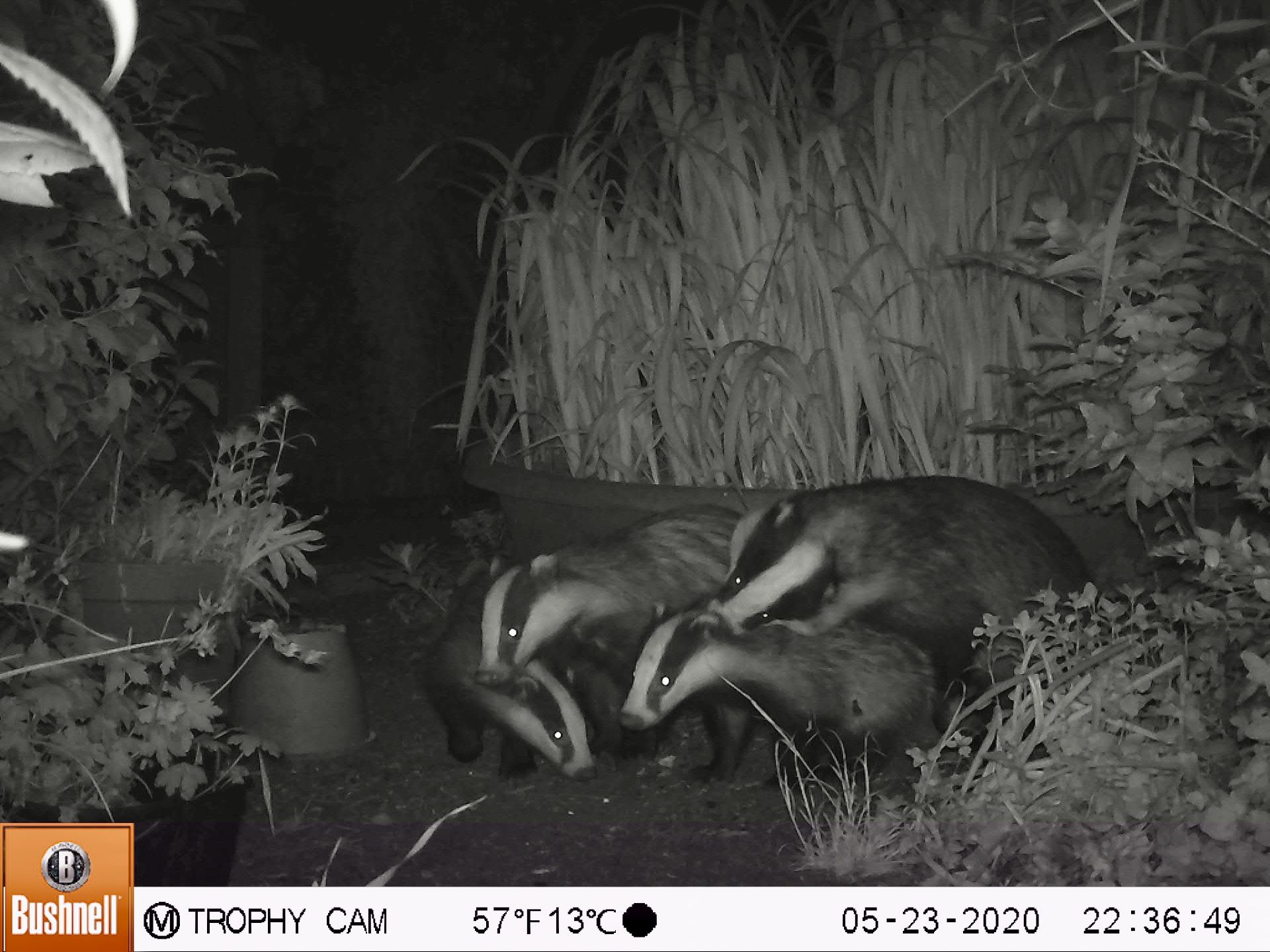
Ferocious carnivores they may be but they are partial to a bit of soft fruit, particularly strawberries or raspberries, and can climb fruit trees to get at cherries or plums. They’ll dig up carrots or new potato crops, too, and will turn up lawns in search of food or to dig latrines. All of which can be a nuisance to gardeners. Discouraging them (badgers rather than gardeners) is not easy, but their activities are limited to particular times of year and are often the result of food shortages, particularly in hot, dry summers. So, one remedy might be to put out food (raw peanuts or fruit, along with a dish of water) until the dry spell ends.
Good neighbours
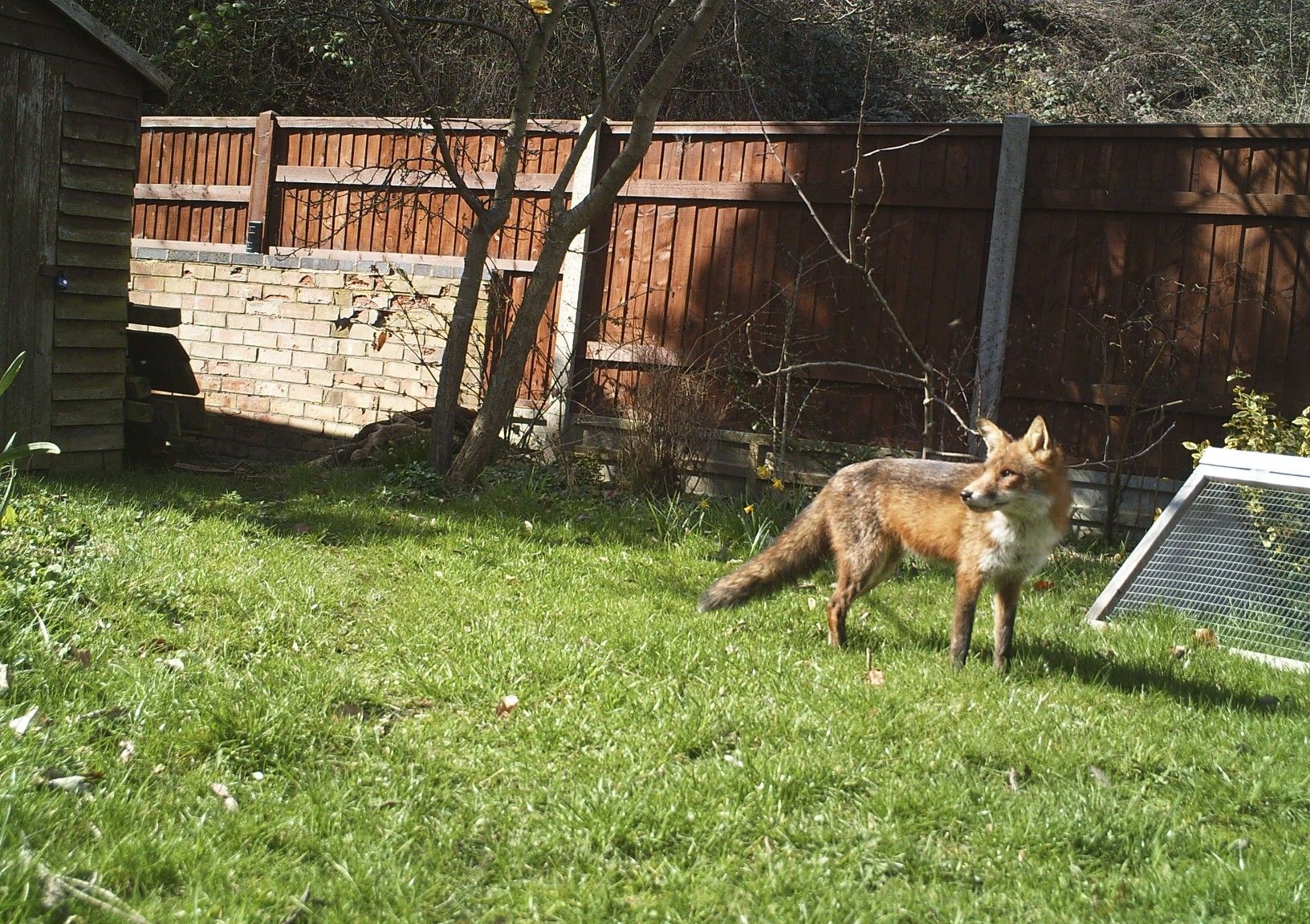
Foxes, too, can get a bad rap. But the only wild member of the dog-family in Britain, while it might appear bold, is too smart to cause any trouble. Attacks by foxes are almost unheard of, vanishingly few compared to those by domestic dogs. In urban areas they hunt less, instead going about cleaning up after us, feeding on the fast food that would otherwise rot or be scattered about by smaller animals. It’s true, they can be noisy neighbours, but only during the mating season, at the start of the year, and it belies the fact that they’re adept communicators, using calls, facial expressions and body postures, as well as scent markings.
Predators are a resourceful, skilful, intelligent lot, and living alongside badgers, foxes, weasels, stoats, even, sometimes, otters, is a chance to acknowledge that. They’re beautifully adapted, big-brained neighbours with supersenses. We might not always get along, but they deserve our respect and a little give and take.
1 Estimating how many of something there, when those things are small, brown, and characteristically elusive, isn’t easy. The most recent estimates of numbers in England, Scotland and Wales collectively, by the Mammal Society, are of around 11,000 otters, 4,000 pine martens, and 83,000 polecats (in total, 98,000). The capacity of Wembley stadium is 90,000.The bigger problem, of course, is getting them to stay in their seats.
Get involved with our mammal watching survey, Living with Mammals today or visit our mammal fact files to learn more about British mammals:
Header image credit: Andy Jenner | Shutterstock.com