
First ever good practice guidance for water vole reintroductions and translocations aims to boost recovery of Britain’s fastest declining mammal
Today, 26th October, Britain’s declining water voles have been given a much needed boost as the first comprehensive best-practice guidance for the reintroduction and translocation of water voles across Britain has been published by wildlife charity People’s Trust for Endangered Species (PTES) and Natural England.
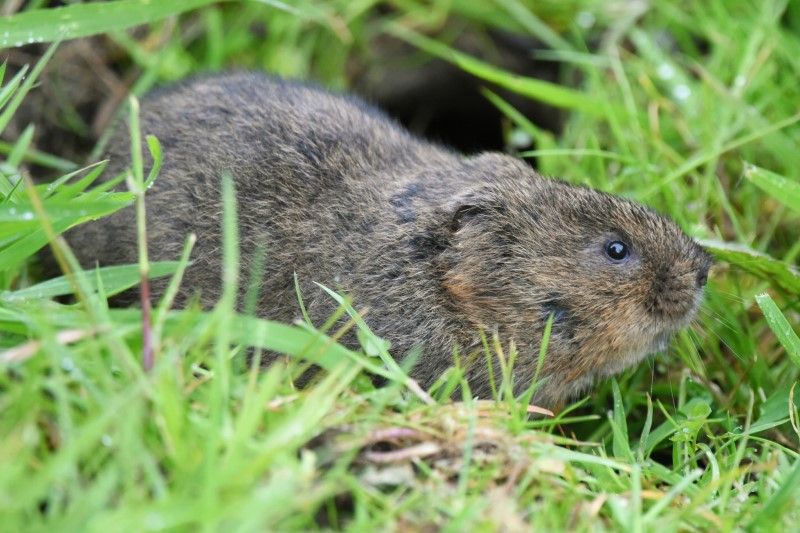
The new Water Vole Releases and Conservation Translocations in Britain: Good Practice Guidance sets out best-practice methods for the reintroduction and translocation of water voles within their indigenous range in Britain, and aims to help conservation organisations, land managers, ecologists and funders plan and deliver future conservation translocation projects that have the best possible chance of success.
Crucially, the new guidance also addresses a major gap in how water vole conservation translocations – moving animals to suitable sites to establish new populations or strengthen existing ones – have previously been planned, carried out and monitored. Water vole conservation translocations have been undertaken in Britain since the late 1990s, yet there is currently no complete national record of such translocations and information gathered from these projects has been inconsistent, making it difficult to determine why they succeed or fail.
The guidance was prepared by Chartered Ecologists and water vole experts Dr Merryl Gelling and Mike Dean on behalf of PTES and Natural England, with input from Natural Resources Wales, NatureScot and the UK Water Vole Steering Group. It has been endorsed by the Chartered Institute for Ecology and Environmental Management (CIEEM) and draws upon published research, data from past releases and the experience of water vole experts and practitioners.
The guidance encourages a much-needed consistent approach and will help practitioners understand what works, where challenges arise and how future releases can be improved. It covers when translocation is appropriate, the difference between reinforcement and reintroduction, site selection (habitat suitability, connectivity, current water vole status, American mink presence), sources of animals (including genetic and disease considerations), the recommended release protocol (minimum numbers, sex ratio, age range, timing and release method), post-release monitoring, non-native American mink control, and the social and practical aspects of a release project. The guidance is specifically for conservation translocations, it does not cover development-driven translocations, such as moving water voles due to housing, infrastructure or other development works.
Dr Merryl Gelling, co-author of the Good Practice Guidance and Director of Spires Ecology said: “Water voles have experienced a catastrophic decline, and conservation translocations are an increasingly important way of restoring this much-loved species. But, simply moving animals from one site to another isn’t enough. Learning from past translocations and understanding why a release succeeds or the reason behind any unexpected outcomes, is essential.”
Mike Dean, co-author of the Good Practice Guidance and Director of MD Ecology continued “Sharing this knowledge and ensuring consistency across all future releases will be fundamental to long-term success. By improving how translocations are undertaken and recording the outcomes, we can learn from both successes and challenges, which helps us to build a stronger evidence base for the future.”
A webinar hosted by CIEEM will take place on 17th November, where authors Dr Merryl Gelling and Mike Dean will talk through the new guidance. It’s free for CIEEM members, and £10 for non-members. Sign up here.
Emily Luck, Water Vole Officer at People’s Trust for Endangered Species (PTES) said: “Water voles were once a common sight on Britain’s waterways, but they became Britain’s fastest declining mammal as a result of habitat loss, fragmentation and predation from non-native American mink. This new guidance brings together the evidence and experience needed to ensure any future release projects create healthy and sustainable populations, giving water voles the best chance of long-term survival and recovery.”
Dr Claire Howe, Principal Specialist for Species Recovery, Natural England added: “Natural England is pleased to have contributed to the development of this guidance, which is an important step forward for water vole conservation. By setting out clear good practice and aligning with established translocation standards, it provides practitioners with a trusted framework, helping to raise the quality and effectiveness of conservation translocations for the benefit of water voles.”
PTES has coordinated the National Water Vole Monitoring Programme (NWVMP) since 2015 and sits on the UK Water Vole Steering Group. With the help of hundreds of passionate volunteers, every year waterways across Britain are surveyed for signs of water voles as part of the NWVMP, which is a vital contribution to the ongoing knowledge of this native species, and will help inform where conservation translocations are most needed.
To read Water Vole Releases and Conservation Translocations in Britain, Good Practice Guidance in full, visit: https://ptes.org/campaigns/water-voles/water-vole-releases-and-conservation-translocations-in-britain/
To find out more about PTES’ water vole conservation work visit www.ptes.org/watervoles.
– ENDS –
For high-res images, or to arrange interviews, contact Adela Cragg:
T: 07852 884885
E: adela@culturecommscollective.com
Notes to editors
- Dr Merryl Gelling of Spires Ecology Ltd, co-author of the Good Practice Guidance
- Mike Dean of MD Ecology Ltd, co-author of the Good Practice Guidance
- Emily Luck, Water Vole Officer, People’s Trust for Endangered Species
About People’s Trust for Endangered Species (PTES)
- PTES, a UK conservation charity created in 1977, is ensuring a future for endangered species throughout the world. We protect some of our most threatened wildlife species and habitats, and provide practical conservation support through research, grant-aid, educational programmes, wildlife surveys, publications and public events.
- PTES’ current priority species and habitats include hazel dormice, hedgehogs, water voles, noble chafers, stag beetles, traditional orchards, native woodlands, wood pasture and parkland and hedgerows.
- Visit www.ptes.org and follow PTES on Facebook, Bluesky, Instagram, YouTube and LinkedIn.
Images: Credit David Edwards