

Together, we can give slow lorises a brighter future
I want to help lorisesWill you help slow lorises by leaving a gift today?
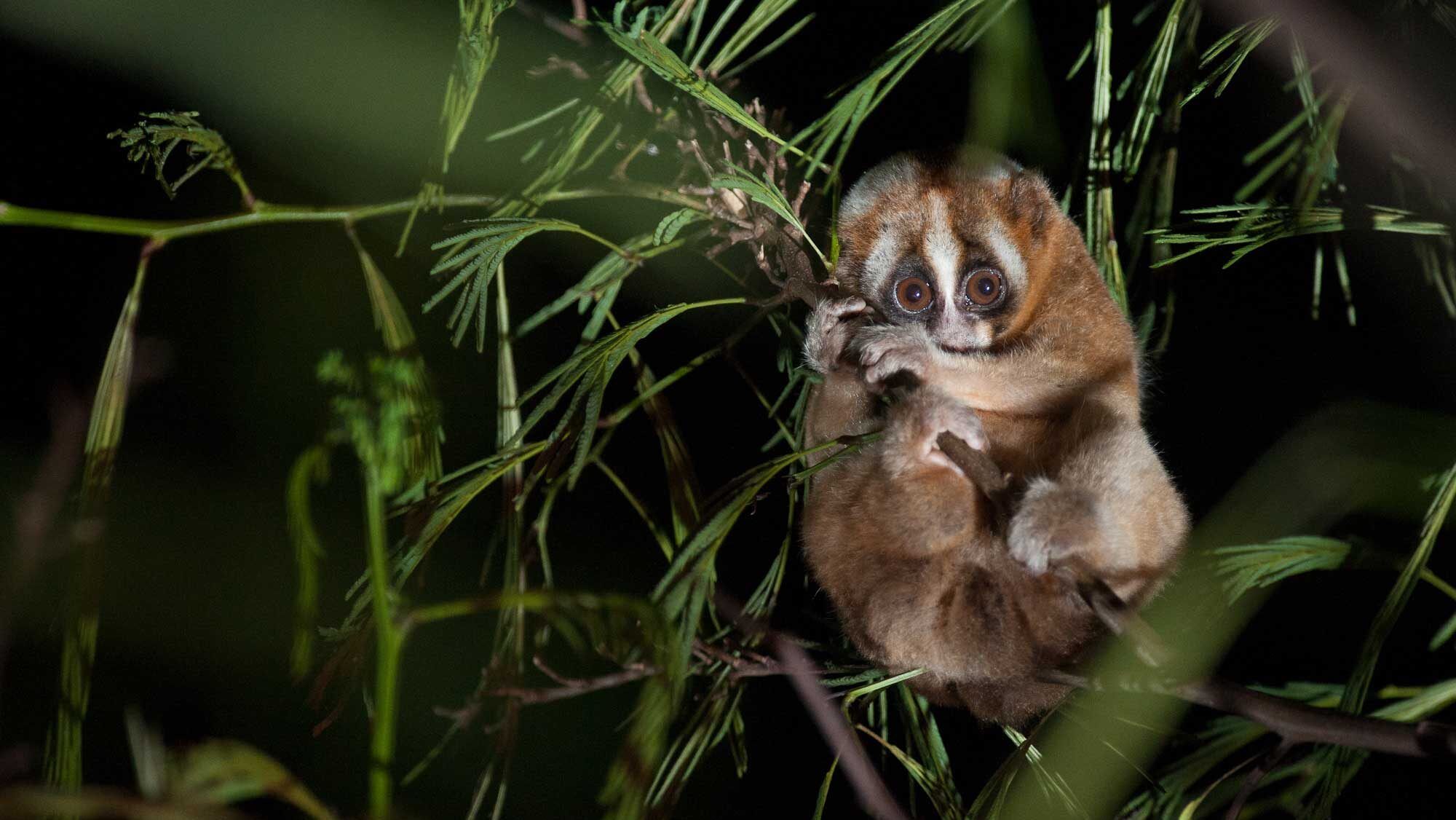
Lorises are small, captivating nocturnal primates that live in the trees, moving carefully and silently. One of the few venomous mammals to exist, they secrete toxin from glands in their elbows.
The problem
Slow lorises are highly sought for the illegal wildlife trade to be sold as pets or used in traditional medicine. Horrifyingly, slow lorises often have their venomous teeth removed using clippers, wire cutters or pliers, with no anaesthetic. This incredibly painful procedure often results in infection or death. Even if rescued, without their teeth they’ll never be able to live in the wild.
Stolen from the wild
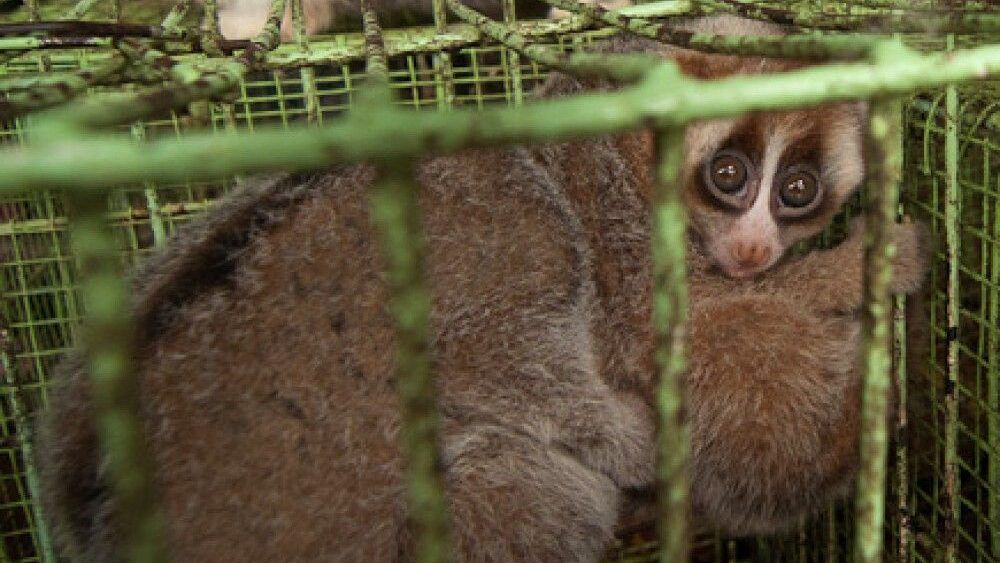
In Java, slow lorises face another crisis. The island is the most deforested and densely populated in the world, with only 10% of its rainforest left. With less forest to hide in, poachers capture them with ease.
Our team in Java, led by Professor Anna Nekaris, is working with small-scale farmers to restore forest habitats. Together they are planting shrubs, fruit-bearing crops and tall trees on farmland. This restores lost forest and provides habitat for slow lorises. In turn, the lorises pollinate trees and eat larvae and insects that damage the crops, such as coffee plants. More tree cover keeps slow lorises safe. Anna’s team has already planted over 100,000 trees. Could you help plant more by supporting this work today?
Building bridges of safety
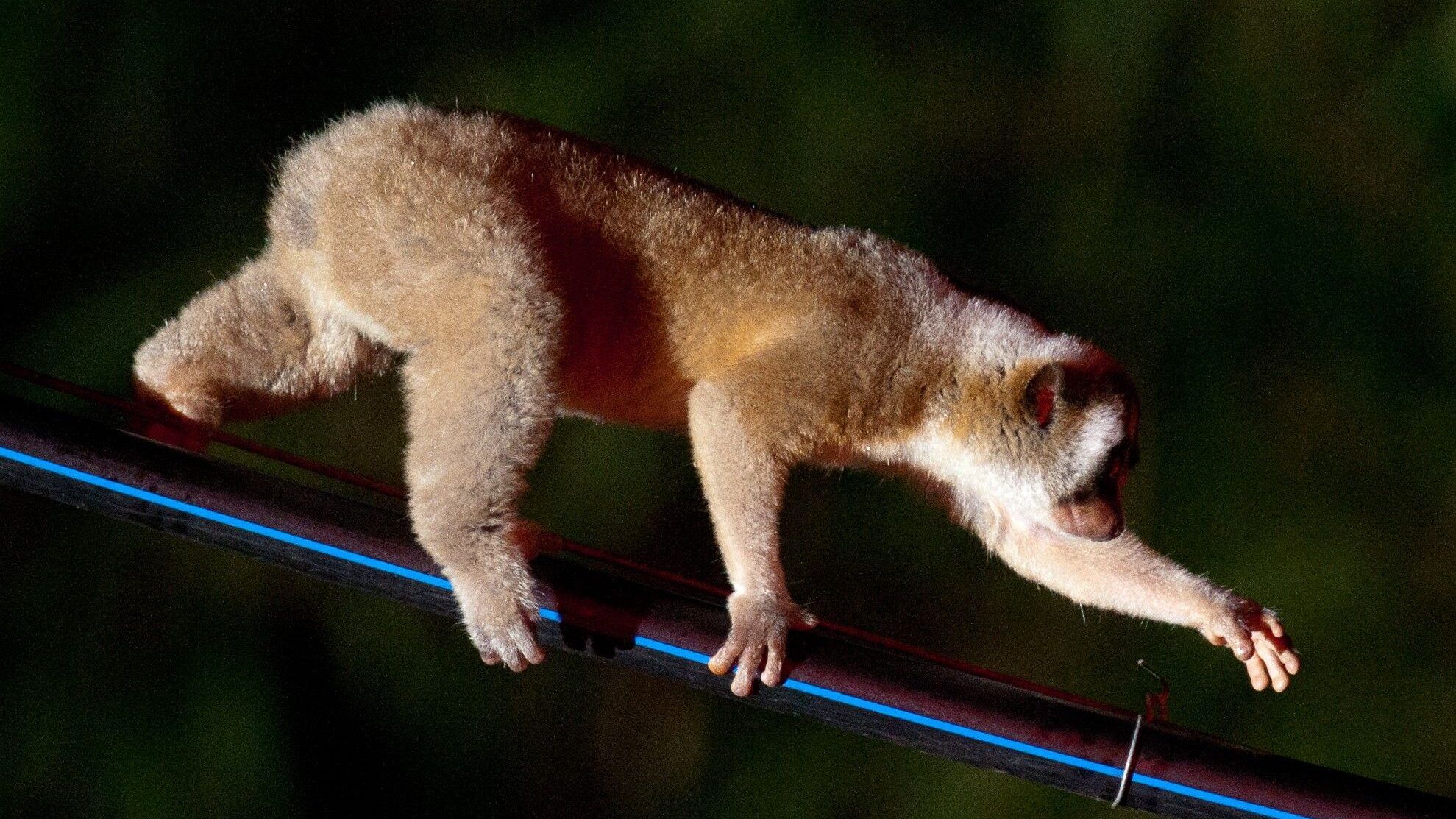
Anna’s team also installs wildlife bridges. They’re made of rubber piping, doubling as hoses for farmers to water their crops. They allow slow lorises to move across clearings at a safe height, keeping them away from poachers.
The bridges already installed have proved so successful that Anna’s team is helping put up more elsewhere in Java. This practical solution helps lorises and other wildlife immediately while habitat restoration is underway. One bridge costs about £300. Could you help install a slow loris bridge by supporting her work?
Image credits: Andrew Walmsley, Little Fireface Project