Building on the 2025 reintroduction in the same woodland, this further release boosts numbers and genetic diversity, helping to restore a native species that has declined by over 70% nationally since 2000
Over 40 rare hazel dormice have been reintroduced into a Leicestershire woodland this week by wildlife charity People’s Trust for Endangered Species (PTES) and partners. This release is part of PTES’ ongoing national reintroduction programme which, for over 30 years, has been restoring this declining native species to woodlands across Britain in a bid to save dormice from extinction.
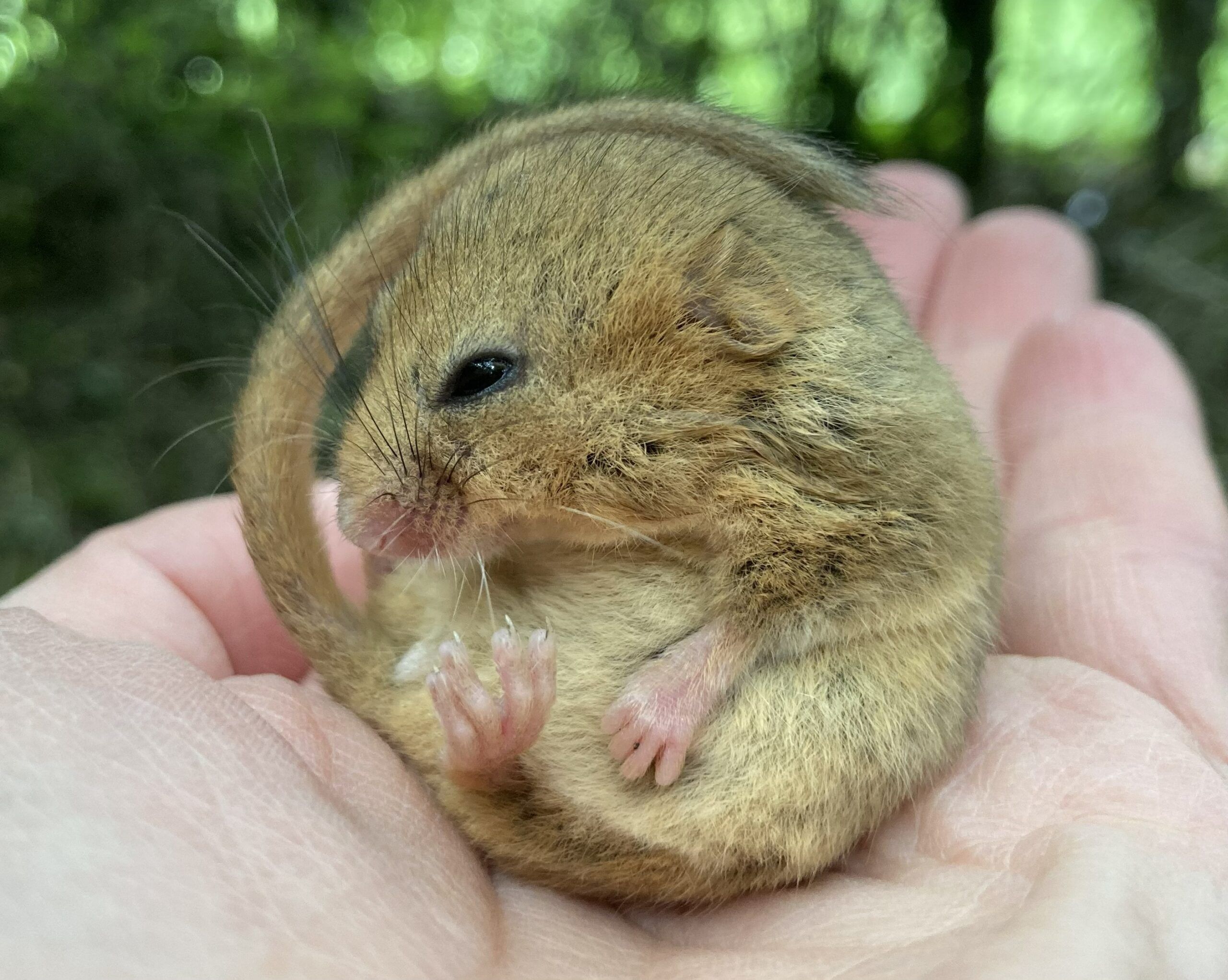
Last year 21 tiny golden-coated mammals were released by PTES and partners into the same woodland on the Bradgate Park Trust estate, creating Leicestershire’s only known population. The estate boasts some of the best remaining ancient woodland in the county, and is both a Site of Special Scientific Interest and part of a National Nature Reserve. Although the dormice released last year have bred and appear to be settling into their new home, more dormice have been released to increase numbers and boost genetic diversity.
Ian White, Dormouse & Training Officer at People’s Trust for Endangered Species explains: “Hazel dormice have declined by over 70% nationally since 2000 due to habitat loss, poor woodland and hedgerow management and climate change. These figures are extremely concerning, but over the past 30 years our reintroduction programme, alongside habitat restoration, sympathetic woodland management and monitoring, is giving this threatened species a real chance of recovery. And, on a local level, by releasing more dormice into Bradgate Park this week, we are one step closer to creating a larger, connected population that hopefully will one day span the whole National Forest, giving further cause for hope.”
Since their release in June 2025, local volunteers and rangers have been regularly monitoring the dormice using nest boxes at Bradgate Park. These boxes help keep tabs on the reintroduced population and reveal evidence of breeding. Encouragingly the team has found a growing number of dormouse nests across the woodland, reflecting the growing population. 46 dormouse nests were found in the October 2025 check and there was evidence of breeding too, with 11 young recorded in August and 15 in September.
James Dymond, Director, Bradgate Park Trust said: “We’re hugely encouraged by how well last year’s dormice have settled into their new home, and to know there is evidence of breeding is extremely gratifying for everyone involved in both the release and ongoing monitoring. We’re thrilled that more dormice will be joining our existing population this year, and look forward to another summer of nest box checks supported by our fantastic volunteers and, hopefully, finding more evidence of breeding as a result.”
Matt Smith, Head Ranger, Bradgate Park Trust added: “Over the past decade we’ve worked hard to sensitively manage our woodlands to ensure they are well connected and provide the best habitat possible for various species, including hazel dormice. We’re committed to long-term management and by working with conservation organisations we can help ensure these iconic mammals continue to thrive in our woodlands for many more years to come.”
PTES’ annual dormouse reintroductions are part of Natural England’s Species Recovery Programme, and since the programme began in 1993, 1,163 dormice have been released into 27 different woodlands in 14 counties across Britain.
The reintroduction programme depends on a unique partnership between several organisations. All dormice released are bred by members of the Common Dormouse Captive Breeders Group, with the majority of this year’s dormice provided by key member Wildwood Trust following its most successful breeding season to date.
Before release, all dormice undergo a thorough nose-to-tail health check by wildlife vets at Whipsnade Zoo in Bedfordshire, Paignton Zoo in Devon and Twycross Zoo in the East Midlands. This four-week quarantine period ensures all dormice are fit for release and don’t carry any diseases that could pose a risk to local wildlife. Once given a clean bill of health, they’re carefully transported to their new woodland home for release.
Like last year, volunteers from Bradgate Park Trust play a vital role in helping the dormice settle in. On the reintroduction day dormice are paired up in nest boxes which are placed into large mesh enclosures filled with natural food, foliage and water, mimicking the wider woodland. Volunteers monitor the dormice daily, replenishing food and water, and over this time the dormice can adjust to the sights, sounds and smells of their new woodland home from the safety of their enclosures. Then, after ten days, wildlife vets return for a final health check before the cage doors are opened and the dormice are free to explore the woodland, breed and eventually spread into neighbouring areas.
The location of this year’s woodland was carefully selected with the help of the Leicestershire & Rutland Wildlife Trust, the Leicestershire & Rutland Mammal Group, the National Forest and Twycross Zoo.
Hazel dormice are the only small British mammal with a furry tail, and with their golden-brown fur, large black eyes and long whiskers, are very endearing. They’re nocturnal animals that are active from late spring into summer and autumn, spending much of their time in tree and shrub canopies, and hibernate over winter in nests on the ground. Their long-term decline reflects the loss of many old woodlands over the last century, the lack of management of those that are left, and the removal and neglect of hedgerows no longer needed to enclose livestock.
To find out more about PTES’ dormouse conservation work, visit www.ptes.org/dormice.
– ENDS –
A Dropbox link to high-res images and footage from the reintroduction will be available for media use. For this link, or to arrange interviews with experts, please contact Adela Cragg:
T: 07532685614
E: adelacraggPR@outlook.com
Notes to editors
- Ian White, Dormouse & Training Officer – People’s Trust for Endangered Species
- James Dymond, Director – Bradgate Park Trust
- Other partners, as requested
About People’s Trust for Endangered Species (PTES)
- PTES, a UK conservation charity created in 1977, is ensuring a future for endangered species throughout the world. We protect some of our most threatened wildlife species and habitats, and provide practical conservation support through research, grant-aid, educational programmes, wildlife surveys, publications and public events.
- PTES’ current priority species and habitats include hazel dormice, hedgehogs, water voles, noble chafers, stag beetles, traditional orchards, native woodlands, wood pasture and parkland and hedgerows.
- Visit www.ptes.org and follow PTES on Facebook, Bluesky, Instagram, YouTube and LinkedIn.
- ROLE IN REINTRODUCTION: Manage and fund the annual dormouse reintroduction programme.
About Bradgate Park Trust
- The Bradgate Park Trustcares for the internationally important landscapes of Bradgate Park and Swithland Wood and their rich wildlife, including Leicestershire’s largest wild red and fallow deer herds. These sites that form the Estate are nationally protected by legislation, as are many of the heritage features of Bradgate Park.
- www.bradgatepark.org/
- ROLE IN REINTRODUCTION: Owners of the woodland location where the dormice are released.
About the Common (Hazel) Dormouse Captive Breeders Group
- Formed in the early 1990’s by a group of like-minded mammal conservationists. The first releases were carried out in 1993 under the auspices of the Natural England Species Recovery Programme for the Hazel dormouse Muscardinus avellanarius. Neil Bemment has been Chairman with responsibility for coordinating the activities of the CDCBG since 2000, while the studbook is currently maintained by Suzanne Kynaston, with assistance from Hazel Ryan, at the Wildwood Trust, Kent.
- ROLE IN REINTRODUCTION: Supply captive-bred hazel dormice for the reintroduction programme.
About the Leicestershire and Rutland Wildlife Trust
- The Leicestershire and Rutland Wildlife Trust is a locally based registered charity (number 210531), concerned with all aspects of nature conservation. Its vision is to create a Living Landscape rich in wildlife, valued and enjoyed by all. The Trust works to protect and enhance the wildlife and wild places of Leicestershire and Rutland and to engage people with nature. The Leicestershire and Rutland Wildlife Trust belongs to a network of 46 Wildlife Trusts across the UK taking action to protect our unique natural heritage. The Royal Society of Wildlife Trusts (RSWT) acts as a national voice, generates support and provides leadership for the movement. https://www.lrwt.org.uk/
- ROLE IN REINTRODUCTION: Scoped woodland site to ensure it is suitable for dormice.
About the Leicestershire & Rutland Mammal Group
- The L&R Mammal Group was formed in 2020 to promote the study and conservation of mammals and their habitats in Leicestershire and Rutland by developing and implementing recording, monitoring and research initiatives, providing advice to support mammal conservation and raising awareness of rare and vulnerable mammals, their ecology and conservation needs. Helen O’Brien is also the County Mammal Recorder for Leicestershire & Rutland (Vice-County 55) which covers both the Calke and Bradgate Estates, providing an opportunity to link the two projects together.
- ROLE IN REINTRODUCTION: Scoped woodland site to ensure it is suitable and are providing volunteers on the day itself and for post-release monitoring and care.
About Natural England
- Natural England works with People’s Trust for Endangered Species to provide an ongoing programme of funding, coordination and monitoring of the dormouse recovery project. Natural England works for people, places and nature to conserve and enhance biodiversity, landscapes and wildlife in rural, urban, coastal and marine areas. They conserve and enhance the natural environment for its intrinsic value, the wellbeing and enjoyment of people, and the economic prosperity it brings.
- www.naturalengland.org.uk.
- ROLE IN REINTRODUCTION: The annual dormouse reintroductions are part of Natural England’s Species Recovery Programme, which is part-funded by Natural England.
About the National Forest Company
- The National Forest, spanning 200 square miles across Derbyshire, Leicestershire, and Staffordshire, began in the early 1990s as a pioneering environmental regeneration project. As the first large-scale broadleaf forest created in over 900 years, it has transformed a post-industrial Midlands landscape into a thriving, multi-purpose forest. With over nine million trees planted, forest cover has risen from 6% to 25%, approaching double the national average for woodland cover. The Forest serves as a national model for how the natural environment can drive regeneration, support climate change mitigation and adaptation, create wildlife habitats, improve air quality, reduce flooding, and promote education, wellbeing, and green business growth.
- The National Forest Company (charity no: 1166563) leads the creation of the National Forest, working in partnership with landowners, local authorities, businesses and its communities. It has strong support from government, politicians and the public, and continues to be supported by the Department for Environment, Food and Rural Affairs.
- ROLE IN REINTRODUCTION: Scoped woodland site to ensure it is suitable for dormice.
About Paignton Zoo
- Paignton Zoo, together with Newquay Zoo and three nature reserves, Slapton Ley National Nature Reserve, Primley Park and Clennon Gorge, are all part of the charity Wild Planet Trust.
- Wild Planet Trust co-ordinates wildlife conservation projects both in the UK and overseas, as well as research projects on topics such as animal behaviour, nutrition, enrichment and ecology.
- Wild Planet Trust is helping to halt species decline and acts to protect at-risk animals and plants from the impacts of biodiversity loss. We believe that every species is important, everything is connected and every action matters.
- Both Paignton Zoo and Newquay Zoo are members of the British & Irish Association of Zoos & Aquariums (BIAZA). BIAZA is a conservation, education and wildlife charity representing over 100 of the best zoos and aquariums in Britain and Ireland.
- Visit www.paigntonzoo.org.uk and follow Paignton Zoo on Facebook, Instagram, Twitter and YouTube.
- ROLE IN REINTRODUCTION: Quarantine dormice to ensure only healthy dormice are released.
About Twycross Zoo
- Twycross Zoo is a registered charity (501841) which exists to support the conservation, education and research of some of the most endangered species on the planet. It is the only UK zoo home to four great apes – chimpanzee, gorilla, orangutan and bonobo; and as part of its 2030 Strategy is working at the forefront of conservation and scientific research to become a global force in biodiversity conservation.
- Goal Five of Twycross Zoo’s 2030 Conservation Strategy is dedicated to ‘Caring for our UK ecosystems’ which includes its target to ‘Reverse The Red’ for dormice.
- Twycross Zoo is one of the UK’s major charity zoos, caring for hundreds of animals from around 70 different species. It welcomes around 700,000 visitors a year to its 100-acre site in Leicestershire.
- Twycross Zoo is a member of European and international organisations, including the British and Irish Association of Zoos and Aquariums (BIAZA), the European Association of Zoos and Aquaria (EAZA), and the World Association of Zoos and Aquaria (WAZA).
- ROLE IN REINTRODUCTION: Quarantine dormice to ensure only healthy dormice are released.
About Whipsnade Zoo
- Whipsnade Zoo is part of ZSL, a science-driven conservation charity, working to protect and restore wildlife in the UK and around the world.
- First opened to the public in 1931, Whipsnade Zoo works to restore wildlife through vital conservation breeding programmes and inspiring a lifelong love of animals in the conservationists of tomorrow.
- Whipsnade zoo’s aquarium is the first and only public aquarium in the UK dedicated to conserving threatened and extinct-in-the-wild freshwater fish.
- Explore the wonders of the natural world at the largest zoo in the UK. Visit https://www.whipsnadezoo.org/ for more information and to book tickets.
- ROLE IN REINTRODUCTION: Quarantine dormice to ensure only healthy dormice are released.
About Wildwood Trust
- Wildwood is an international centre of excellence for the conservation of British Wildlife. Since 1999, the charity, which has wildlife parks in Devon and Kent, has been devoted to protecting, conserving and rewilding the UK. The purpose is to give native species a future. Wildwood Trust has taken part in many ground-breaking conservation programmes to date, which include, saving the water vole, using wild horses to help restore Kent’s most precious nature reserves and bringing the extinct European beaver back to Britain. Later this year, the trust will be opening – in partnership with Restore – England’s first ever purpose built breeding facility for invertebrates at its Devon site. This promises to transform the future of some of the country’s most endangered, and extinct, invertebrate species.
- Visit the website here: https://wildwoodtrust.org/
- ROLE IN REINTRODUCTION: Supply captive-bred hazel dormice for the reintroduction programme and manage the studbook to ensure genetic diversity.
About ZSL
Founded in 1826, ZSL is an international conservation charity, driven by science, working to restore wildlife in the UK and around the world; by protecting critical species, restoring ecosystems, helping people and wildlife live together and inspiring support for nature. Through our leading conservation zoos, London and Whipsnade, we bring people closer to nature and use our expertise to protect wildlife today, while inspiring a lifelong love of animals in the conservationists of tomorrow. Visit www.zsl.org for more information.
ZSL’s Disease Risk Analysis and Health Surveillance (DRAHS) veterinary experts help mitigate the risk from disease during dormice translocations. They ensure that the dormice are fit and healthy for release, and free of non-native parasites, and have the best chance of survival in their new forest home.
ROLE IN REINTRODUCTION: Quarantine dormice to ensure only healthy dormice are released.
Images: Angyalosi Beata | shutterstock, People’s Trust for Endangered Species.
