Reducing bycatch to protect endangered Irrawaddy dolphins
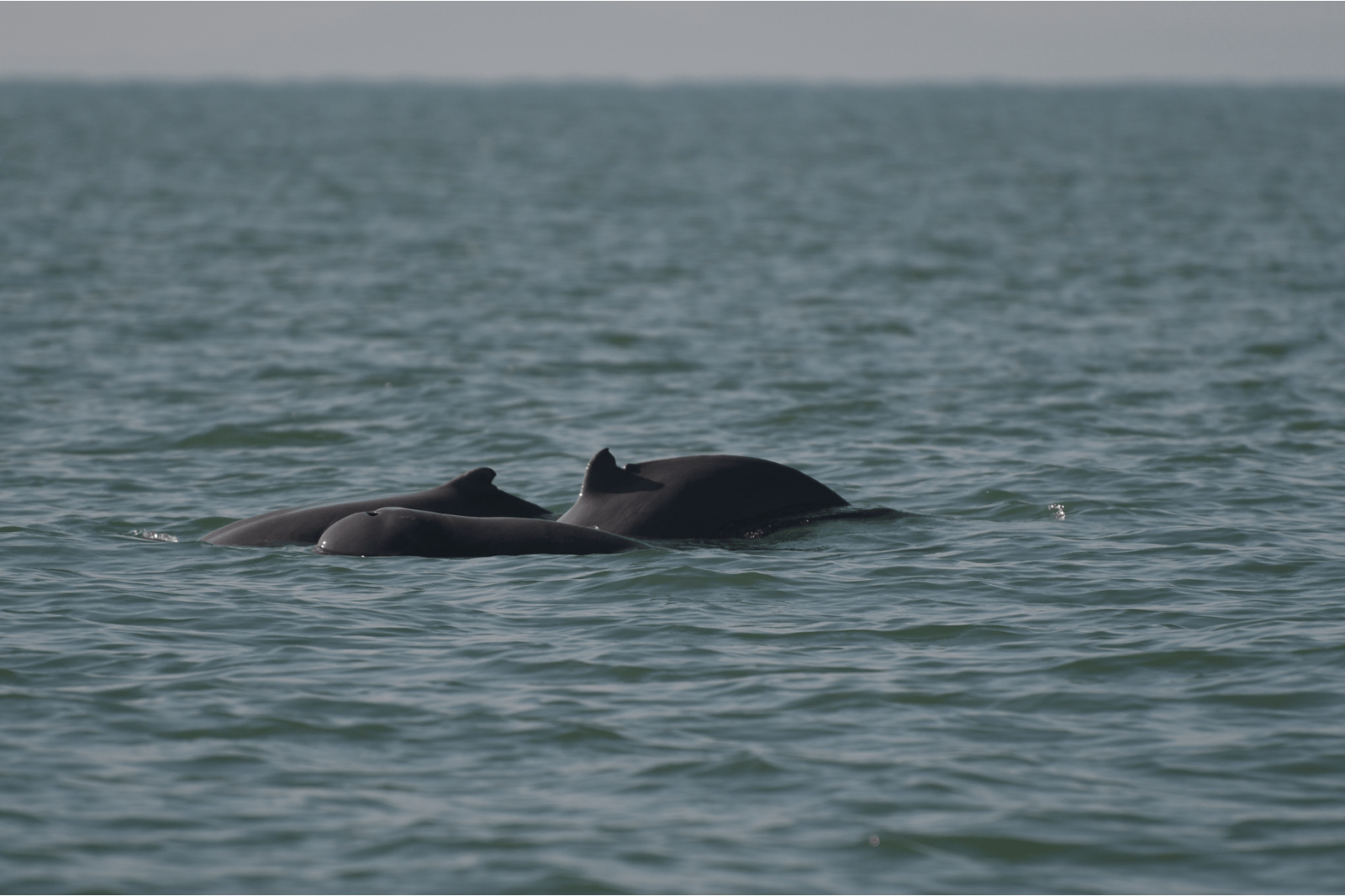
Khmer Ocean Life is working closely with local fishing communities to find a practical, low-cost solution to prevent harm to the dolphins.
New research highlights dangers of gillnet fishing for Irrawaddy dolphins
Cambodia’s southern coast is home to one of the region’s most threatened marine mammals: the Irrawaddy dolphin. These shy, round-faced dolphins once swam widely across Southeast Asia, but today only small, isolated groups remain. In Cambodian waters, accidental entanglement in fishing nets is the biggest danger they face, with many dolphins dying before they can be rescued.
The waters here are busy, with coastal communities relying heavily on gillnet fishing. For Irrawaddy dolphins and other small cetaceans, this means they must navigate a maze of nets every day. Until recently, very little research had been carried out to understand how often dolphins were becoming caught, or which areas carried the greatest risks. Without this information, it has been difficult for fishers, authorities and conservationists to work together to reduce harm.
Finding practical solutions for local communities to help dolphins
Our new partner, Khmer Ocean Life, is working closely with local fishing communities to find a practical, low-cost solution. The project is focusing on testing simple acoustic reflectors – made from upcycled plastic bottles – that help dolphins detect nets more easily. These reflectors are inexpensive, easy to make, and suitable for small-scale fisheries, meaning they could be widely adopted if they’re effective.
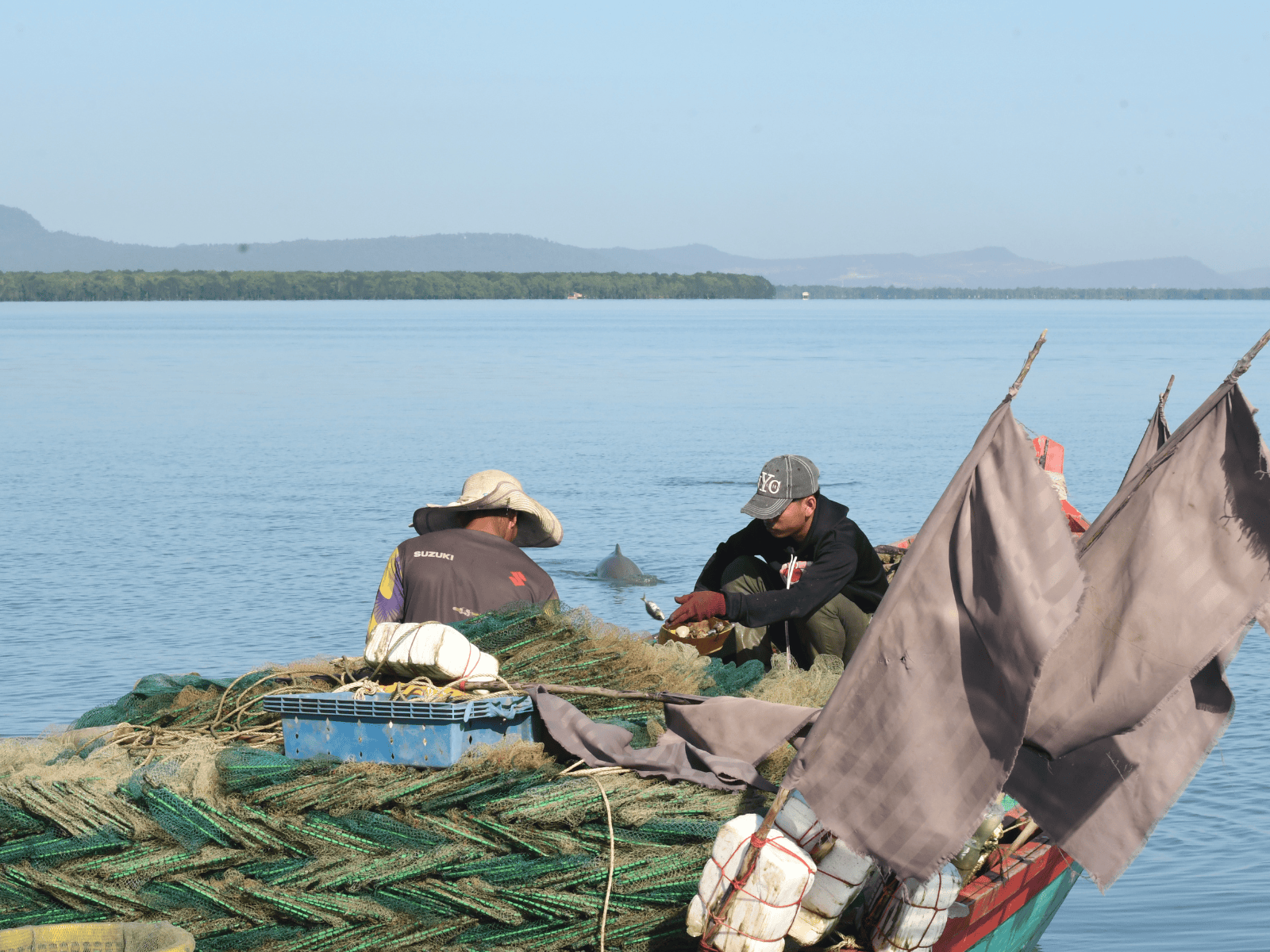
Over the coming months, the team will work with dozens of fishers to compare catch rates and bycatch levels on nets with and without reflectors. They’ll also support local authorities in monitoring dolphin strandings and bycatch incidents, building the evidence needed to strengthen Cambodia’s Marine Mammal Bycatch Mitigation Action Plan.
This work offers real hope for one of Southeast Asia’s most threatened dolphins. By finding a solution that’s simple, community-led and affordable, the project aims to reduce bycatch across the region, helping Irrawaddy dolphins, humpback dolphins and finless porpoises survive in the waters they have long called home.
We want to give Irrawaddy dolphins a brighter future; with your help we can make a difference.
Image credits Khmer Ocean Life