
Using footprints to monitor small mammals
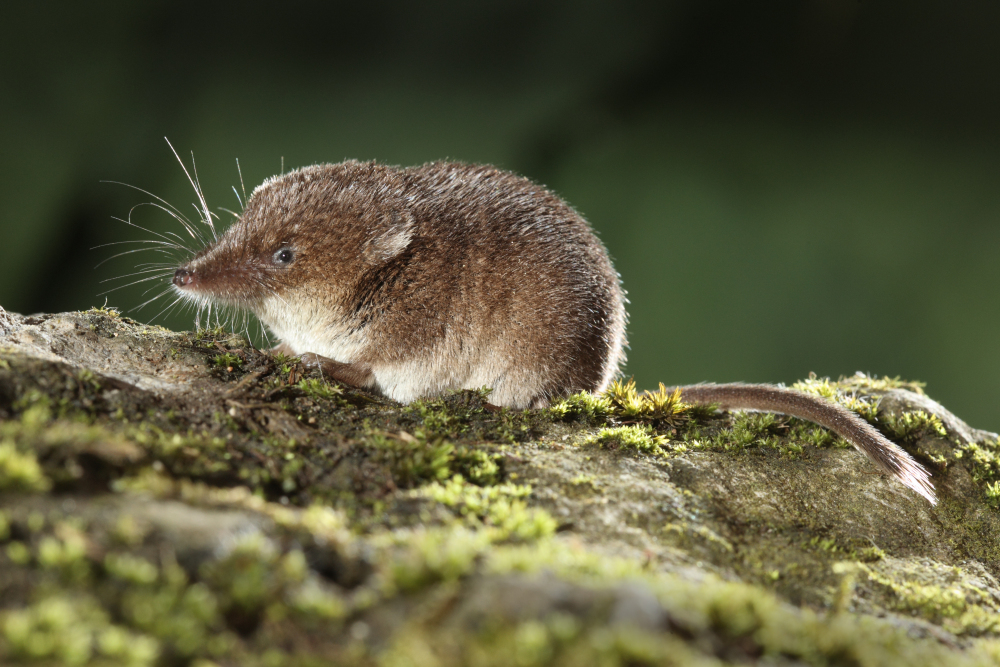
New technology could transform how we monitor small mammals in the UK. Our intern, Jazz Woollard, is putting it to the test.
The tales that tracks can tell

Understanding small mammal population dynamics is key to their conservation. Traditionally, animals are trapped and handled to gather data on where they’re found, how widespread they are and to give an indication of their numbers in any given area. But trapping is both time-consuming and invasive. It’s possible it can also impact their behaviour and ecology, although this isn’t fully understood at the moment.
To reduce potential disturbance, non-invasive survey techniques are becoming increasingly popular and valuable. Collecting and analysing footprints is a great way to identify which animals are within a given area and the footprint tunnels used to collect them require little to no contact with the animal itself. Footprint tunnels are now commonly used in the UK to check for the presence or absence of a given species, although correctly identifying some species from their footprints alone can be extremely challenging and time consuming.
WildTrack, an organisation based in North Carolina in the United States, has been developing innovative technology to streamline the analysis of animal footprints using artificial intelligence (AI). Starting with larger mammals, such as rhinoceros and cheetah, WildTrack has developed Footprint Identification Technology (FIT) that can recognise individual animals from a single footprint. This technology offers a powerful non-invasive tool for species level and individual level identification.
Mice and voles and shrews
We have a diverse range of small mammals in the UK, including harvest mice, voles and shrews. Some species have very similar footprints, making distinguishing between them, let alone between males and females, a real challenge.
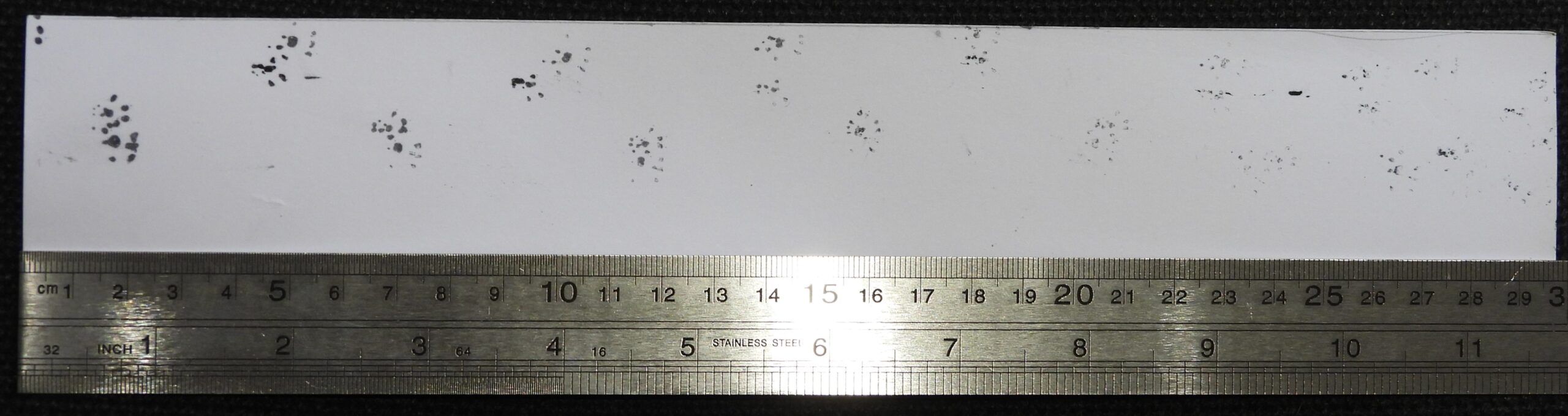
Our new intern, Jazz Woollard, based at The Wildwood Trust in Kent, is building on work carried out by another of our interns Ellie Smart, to test whether FIT can be trained to identify not only the species but also the sex of the individual, based on unique footprint characteristics. To do this, she needs to collect plenty of footprints from known individuals to produce a robust baseline dataset.
Jazz is collecting footprints from wild and captive individuals. She’s then identifying whether the animals are male or female before collecting their footprints. This information will then be programmed into FIT to look for patterns and distinctive characteristics between same sex and species footprints.
If successful, this project could transform how we monitor small mammals in the UK. Instead of lengthy analysis or invasive trapping, conservationists could photograph footprints collected in tunnels and use FIT to quickly and accurately determine the species and sex.
The results from the surveys will contribute to other projects, such as the South-East Pine Marten Restoration Project. The team working to bring pine martens back to southern England needs to identify suitable sites to release the animals into. A suitable home needs good habitat and a ready supply of food – in other words, plenty of small mammals.
Header image credit Erni | shutterstock.com